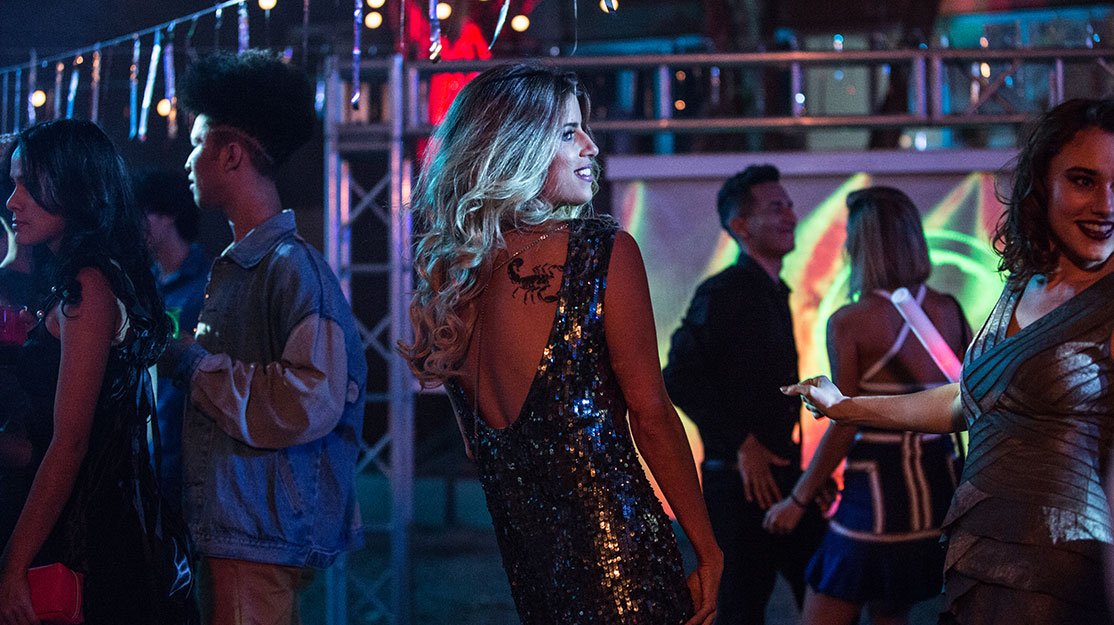
The fluorescent glow of a computer screen, the tapping of keys, the hushed notoriety of a blog that pulled back the curtain on a hidden world—these are the raw ingredients of a phenomenon that captivated a nation and then the globe. We’re talking, of course, about "Me Chama de Bruna," a series that doesn't just offer an overview and plot summary but plunges you headfirst into the audacious, complex, and often heartbreaking life of one of Brazil's most infamous figures.
This isn’t just another show; it’s a visceral journey through identity, choice, and survival, based on the real-life transformation of Raquel Pacheco into Bruna Surfistinha. If you've been curious about the woman behind the pseudonym, the intricate narrative woven through its seasons, or why this story continues to spark conversation, you’ve come to the right place. We're peeling back the layers to understand exactly why "Me Chama de Bruna" is more than just an erotic drama – it’s a compelling human story that defies easy categorization.
At a Glance: Your Quick Guide to Bruna's World
Before we dive deep, here's what you need to know about "Me Chama de Bruna":
- Based on a True Story: The series chronicles the real-life journey of Raquel Pacheco, a middle-class São Paulo teenager who ran away from home to become a sex worker, famously known as Bruna Surfistinha.
- Genre: A compelling blend of biographical drama, erotic thriller, and coming-of-age story, often intense and unflinching.
- Central Theme: Explores themes of identity, autonomy, female empowerment, social judgment, and the complexities of sex work.
- Starring: Maria Bopp delivers a critically acclaimed performance as Bruna/Raquel, capturing the character's vulnerability, defiance, and evolution.
- Seasons: The series ran for four seasons, each delving deeper into Bruna’s life, her relationships, and the impact of her choices.
- Origin: A Brazilian production, originally released on Fox Premium and later gaining international recognition, including on streaming platforms like Netflix in various regions.
- Why Watch: For its raw honesty, powerful acting, nuanced exploration of controversial themes, and a narrative that challenges societal norms.
From Real Life to Reel Life: The Shocking True Story Behind the Series
To truly grasp "Me Chama de Bruna," you must first understand its roots in reality. The series is an adaptation of Raquel Pacheco's autobiography, "O Doce Veneno do Escorpião" (The Sweet Venom of the Scorpion), published in 2005. Raquel, a seemingly ordinary middle-class teenager from São Paulo, made a decision that would forever alter her life and challenge Brazilian society: at 17, she left her adoptive home to become a call girl.
What started as a desperate act of rebellion and a quest for independence quickly evolved. Raquel adopted the moniker "Bruna Surfistinha," a name that would soon become synonymous with her tell-all blog. On this blog, she meticulously documented her experiences, her clients, her struggles, and her triumphs in the world of sex work. This raw, unfiltered perspective captivated readers, turning her into an overnight sensation and a controversial figure. She wasn't just a sex worker; she was a chronicler, an entrepreneur, and a provocateur. The series faithfully attempts to capture this dramatic transformation, laying bare the motivations, the risks, and the surprising resilience of a young woman carving out her own path in a world designed to judge her.
Unpacking the Narrative: Me Chama de Bruna's Central Plot & Evolution
The series excels in its layered approach, meticulously charting Bruna’s evolution across four seasons. It’s far from a linear, celebratory tale; rather, it's a gritty, often uncomfortable look at the nuances of survival and self-discovery.
Season 1: The Genesis of Bruna Surfistinha
The inaugural season plunges us into Raquel's suffocating reality as a shy, misunderstood teenager in an affluent São Paulo household. Feeling invisible and unloved by her adoptive parents, she craves independence and validation. A chance encounter and a desperate desire for control lead her to leave home and enter the world of prostitution. This isn't a glamorous entry; it’s fraught with fear, exploitation, and quick lessons in survival. We witness her shedding the skin of "Raquel" and slowly, deliberately, crafting the persona of "Bruna Surfistinha." This involves navigating rivalries, learning the unspoken rules of the trade, and forming unlikely alliances. The season masterfully portrays her initial vulnerability giving way to a nascent confidence, culminating in the birth of her infamous blog, which becomes both her shield and her weapon.
Season 2: Consolidation and the Price of Fame
With her blog gaining notoriety, Bruna's life takes a new turn. She's no longer just a call girl; she's a celebrity, a brand. This season explores the double-edged sword of her newfound fame. While it brings a sense of power and control, it also invites increased scrutiny, danger, and a loss of privacy. We see her wrestling with her identity, the public's perception of her versus her private self. Relationships become more complicated, and the lines between professional and personal blur. The series delves into the emotional toll of her profession, the yearning for genuine connection amidst transactional encounters, and the constant threat of violence or betrayal inherent in her line of work. It's a period of consolidation, but also of profound introspection and growing disillusionment.
Season 3: Expansion, Love, and Legacy
By the third season, Bruna is a force to be reckoned with. Her blog has become a national sensation, and she's exploring opportunities beyond the confines of the brothel. This season focuses on her attempts to legitimize her presence in the public eye, including ventures into media appearances and even a potential book deal. Crucially, it introduces a significant romantic relationship that challenges her previously transactional view of intimacy. We see Bruna grapple with the idea of a "normal" life, of love and commitment, while still firmly rooted in her identity as Bruna Surfistinha. The season raises questions about what "moving on" truly means when your past is your public persona, and whether genuine happiness is attainable within or outside the boundaries she’s created for herself. It’s a compelling look at the search for meaning and a lasting legacy. For those interested in real-life stories brought to the screen, this season truly highlights the biographical depth.
Season 4: Reflection and the Final Chapter
The final season brings Bruna's journey to a poignant close. Having achieved a degree of stability and success, she begins to reflect on her past, her choices, and the woman she has become. This season is less about new adventures and more about introspection, healing, and coming to terms with the complex tapestry of her life. We see her confronting old demons, mending fractured relationships, and ultimately seeking a path toward a future that honors both Raquel and Bruna. It’s a mature and often moving exploration of closure, forgiveness, and the enduring impact of a life lived unconventionally. The series aims to provide a sense of resolution, not necessarily in a tidy, fairytale ending, but in a way that feels authentic to the real Raquel Pacheco’s ongoing journey.
Beyond the Glamour: Exploring the Series' Deepest Themes
"Me Chama de Bruna" is much more than its explicit content; it's a rich tapestry woven with complex human themes that resonate far beyond the confines of its setting.
Identity and Reinvention
At its core, the series is a profound exploration of identity. Raquel’s transformation into Bruna is not merely a costume change but a radical act of self-creation. She molds Bruna into everything Raquel isn't: confident, defiant, and in control. The series asks: can you truly shed one identity for another? How much of Bruna is a performance, and how much is the true Raquel finally emerging? This constant interplay between the two personas is a central tension, revealing the fluidity and malleability of self.
Autonomy and Control
For Raquel, becoming Bruna is a desperate grab for autonomy in a life where she felt powerless. In the transactional world of sex work, she paradoxically finds a twisted sense of control over her body, her earnings, and her narrative. The series highlights how she uses her agency, sometimes wisely, sometimes recklessly, to navigate a system designed to exploit. This theme invites viewers to ponder the nature of power, control, and freedom, especially for women in marginalized positions.
Societal Judgment and Hypocrisy
One of the show's most potent messages is its critique of societal hypocrisy. Bruna's blog, and by extension the series, forces an uncomfortable mirror up to a society that simultaneously condemns and consumes sex work. It exposes the double standards, the moral judgments leveled against women in the industry, and the often-hidden lives of the "respectable" men who frequent them. Bruna's defiance in the face of this judgment makes her a compelling, if controversial, figure. If you're keen to explore our analysis of other controversial series, you'll find "Me Chama de Bruna" a prime example of art that challenges norms.
The Complexities of Sex Work
"Me Chama de Bruna" refrains from glorifying or entirely condemning sex work. Instead, it offers a multi-faceted, often brutal, look at its realities. It portrays the risks, the emotional toll, the violence, but also the occasional moments of camaraderie, agency, and even unexpected intimacy. The series challenges simplistic narratives, suggesting that for some, it can be a chosen path, a means of survival, or a source of empowerment, while for others, it's a trap. It's a stark reminder of the nuanced portrayal of sex work in media.
Family and Belonging
Despite her rebellious exterior, Bruna constantly yearns for connection and a sense of belonging. Her fraught relationship with her adoptive family, her search for love, and her desire for genuine friendship underscore the universal human need for acceptance. The series subtly explores how her choices impact her ability to form and maintain these bonds, and the sacrifices she makes in her quest for self-determination.
Meet the Faces: Key Cast and Characters
The success of "Me Chama de Bruna" hinges significantly on its stellar cast, particularly the magnetic performance of its lead.
Maria Bopp as Bruna/Raquel
The heart and soul of the series, Maria Bopp delivers a truly transformative performance. She masterfully navigates the duality of Bruna and Raquel – the fierce, calculating sex worker and the vulnerable, searching young woman underneath. Bopp's portrayal is nuanced, raw, and fearless, allowing viewers to empathize with Bruna's journey even when her choices are questionable. Her ability to convey both strength and fragility makes Bruna a complex, unforgettable character. Her portrayal earned significant critical acclaim and cemented her status as a formidable talent.
Other Significant Supporting Roles
While Bopp carries the show, the supporting cast provides crucial depth and context:
- Stella (Carla Cristina Cardoso): Often Bruna's confidante and voice of reason in the brothel, Stella represents a grounded, experienced perspective on the sex work industry, offering both wisdom and warnings.
- Michelle (Jonathan Haagensen): A charismatic and sometimes dangerous figure who becomes entangled in Bruna's life, representing the allure and peril of the world she inhabits.
- José Ricardo (Lui Mendes): A recurring client whose interactions with Bruna highlight the range of relationships she forms, from purely transactional to surprisingly personal.
- The Madam (Suzana Pires and later Gisele Fróes): The formidable figures who run the brothels, embodying the power structures and complexities of the business. Their performances reveal the harsh realities and occasional leniency of the environment.
- Carlos (Nash Laila) and other colleagues: These characters provide a glimpse into the camaraderie, rivalries, and shared experiences among Bruna's peers, offering different perspectives on their profession.
The ensemble cast brings authenticity to the gritty world of "Me Chama de Bruna," making each interaction feel lived-in and impactful.
Behind the Scenes: Production, Direction, and Creative Vision
The production of "Me Chama de Bruna" is a testament to Brazilian television's growing sophistication and willingness to tackle challenging subjects. Produced by TVZero for Fox Premium, the series benefited from a strong creative vision focused on authenticity and a non-judgmental approach to its controversial subject matter.
The show's directors, including Márcia Faria, Pedro Amorim, and Calvito Leal, employed a visual style that balances gritty realism with moments of stark beauty. They often used a muted color palette for Raquel's past, contrasting it with the vibrant, sometimes garish, world of Bruna. The camera work is intimate, often placing the viewer directly into Bruna's perspective, fostering a sense of empathy and urgency.
One of the key achievements of the creative team was translating the deeply personal and often explicit nature of Raquel Pacheco's memoir into a visually compelling narrative without resorting to sensationalism. They focused on Bruna's internal journey, her psychological landscape, and the emotional toll of her life choices, rather than merely dwelling on the superficial aspects of sex work. The writing, helmed by Roberto Duarte, Gabriela Amaral Almeida, and others, ensured that Bruna remained a complex, evolving character, never a stereotype. This commitment to depth and realism is a significant factor in the series' enduring appeal and critical recognition.
Critical Reception and Cultural Impact: Why Bruna Resonates
When "Me Chama de Bruna" first premiered, it immediately sparked intense debate in Brazil and later internationally. Critics praised its daring subject matter, its unflinching portrayal of sex work, and especially Maria Bopp's powerful lead performance. Many lauded the series for its attempt to humanize a figure often demonized by society, offering a nuanced perspective on her journey.
The show was praised for:
- Authenticity: Its commitment to depicting the realities of Bruna’s world, from the mundane to the dangerous, resonated with viewers.
- Challenging Narratives: It pushed boundaries by presenting a protagonist who, despite her profession, sought agency and control, forcing audiences to confront their own prejudices.
- Strong Storytelling: Beyond the controversy, the series was recognized for its compelling dramatic arc, character development, and high production values, standing shoulder-to-shoulder with other premium international dramas.
However, the series also faced criticism, particularly regarding its explicit content and the potential for romanticizing sex work. These discussions, however, only amplified its cultural impact, solidifying its place as a significant piece of Brazilian television that ignited crucial conversations about morality, freedom, and the diverse experiences of women. It became a benchmark for exploring other captivating Brazilian TV shows that push social commentary.
Is "Me Chama de Bruna" For You? Navigating the Mature Themes
"Me Chama de Bruna" is undeniably a series for mature audiences, and it's essential to approach it with an understanding of its content.
Content Warnings:
- Explicit Sexual Content: The series deals directly with sex work and features numerous scenes of a sexual nature. While often integral to the plot and character development, these scenes can be graphic.
- Nudity: Frequent nudity is present throughout the seasons.
- Violence and Abuse: Bruna's journey exposes her to various forms of violence, exploitation, and emotional abuse, reflecting the inherent dangers of her profession.
- Drug Use: The series includes depictions of drug use within the context of the setting.
- Mature Language: Strong and explicit language is used.
Who Might Appreciate It: - Viewers interested in true crime/biographical dramas: If you enjoy stories based on real-life figures and their complex journeys, Bruna’s story offers compelling insight.
- Fans of character-driven narratives: The series is deeply focused on Bruna’s internal world, her psychological evolution, and her quest for identity.
- Those open to challenging social norms: If you appreciate media that tackles controversial subjects with nuance and encourages critical thought about societal judgments, this show is for you.
- Aficionados of international drama: Its high production quality and powerful performances make it a standout among global series.
Who Might Find It Challenging: - Viewers sensitive to explicit content: If you are uncomfortable with graphic sexual scenes, nudity, or violence, this series may be too intense.
- Those seeking light entertainment: This is a heavy, dramatic series that demands emotional engagement and isn't designed for casual viewing.
Ultimately, "Me Chama de Bruna" is a powerful and thought-provoking series, but its themes and content require a certain level of maturity and open-mindedness from its audience.
Burning Questions Answered: Your FAQ on the Bruna Surfistinha Saga
We've covered a lot, but some questions pop up frequently about Bruna and her story. Here are crisp, direct answers:
- Is "Me Chama de Bruna" entirely accurate to Raquel Pacheco's life?
While based on Raquel Pacheco's autobiography, like most biographical adaptations, the series takes creative liberties for dramatic effect. Key events, relationships, and the overall arc are true to her story, but specific dialogues or minor characters might be fictionalized or composites. It captures the spirit and essence of her journey rather than being a documentary. - Where can I watch "Me Chama de Bruna" today?
Availability varies by region. The series originally aired on Fox Premium in Latin America. It has also been available on Netflix in several countries. It's best to check your local streaming services or dedicated platforms for Fox/Star content (like Star+ in some regions) to confirm current access. - How many seasons of "Me Chama de Bruna" are there?
There are a total of four seasons, each further developing Bruna's story and character arc. - Is Bruna Surfistinha a real person?
Yes, Bruna Surfistinha is the pseudonym of Raquel Pacheco, a real Brazilian woman whose autobiography became a national bestseller and inspired both this series and a feature film. She is still a public figure in Brazil. - What was Raquel Pacheco's motivation for becoming Bruna Surfistinha?
Raquel's motivations were complex, stemming from a desire for independence, a feeling of being unloved and misunderstood by her adoptive family, a quest for control over her own life, and a rebellious spirit against societal norms. The series delves into these psychological underpinnings. - Is Maria Bopp still in contact with the real Raquel Pacheco?
While preparing for the role, Maria Bopp did meet and spend time with Raquel Pacheco to understand her story and personality. This close collaboration was crucial for her authentic portrayal. - What other works are based on Bruna Surfistinha's story?
Before the series, a highly successful Brazilian feature film titled "Bruna Surfistinha" (or "Confessions of a Brazilian Call Girl" in English) was released in 2011, starring Deborah Secco in the titular role.
Diving Deeper into Bruna's World: Your Next Steps
You've now got a comprehensive understanding of what makes "Me Chama de Bruna" such a compelling and significant series. From its gritty origins in Raquel Pacheco's true story to its nuanced exploration of identity and autonomy, it’s a show that challenges, provokes, and ultimately, humanizes.
If this overview has piqued your interest, your next natural step is to watch the series yourself. Immerse yourself in Maria Bopp's incredible performance and experience Bruna's journey firsthand. Engage with its themes, discuss it with friends, and reflect on the societal questions it raises.
For an even deeper dive into everything related to this groundbreaking series, from character analyses to behind-the-scenes insights and comparisons with the original memoir, we invite you to Visit the Me Chama de Bruna hub. There, you'll find a wealth of information to satisfy your curiosity and continue your exploration of one of Brazil's most unforgettable stories.