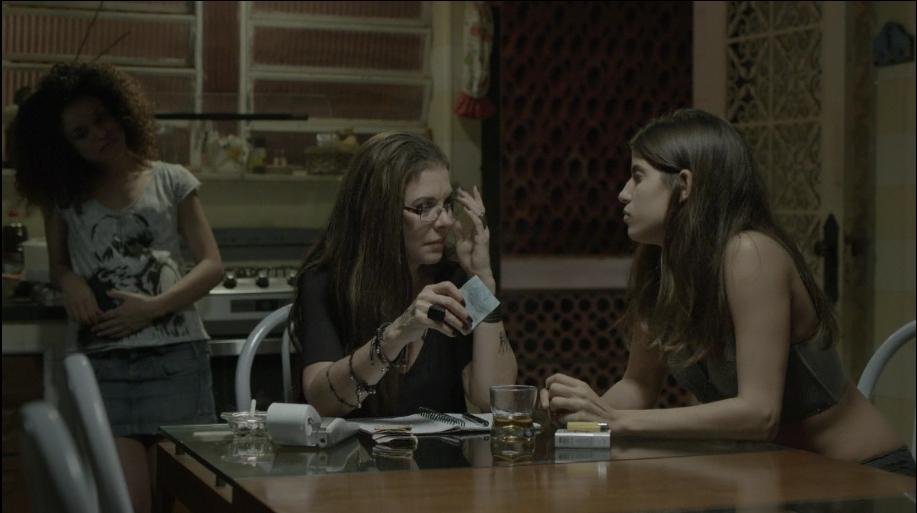
When a memoir explodes from the page, captivating readers with its raw honesty, the journey to screen is rarely a straightforward translation. Such is the compelling story behind 'Me Chama de Bruna' Book vs. Series/Film Adaptation, a fascinating case study in how real life transforms into literary narrative, and then again into visual drama. The captivating saga of Bruna Surfistinha, the alias of former sex worker Raquel Pacheco, has resonated deeply, first in her groundbreaking autobiography, O Doce Veneno do Escorpião (The Sweet Poison of the Scorpion), and later in the popular Brazilian TV series Me Chama de Bruna.
But how does the intimate experience of reading a first-person account compare to the heightened reality of a television series? And where does the "film" aspect fit into this complex adaptation landscape? Let's peel back the layers and explore the nuanced differences that define each version of Bruna's unforgettable journey.
At a Glance: Book vs. Screen Adaptation
- The Book (O Doce Veneno do Escorpião): Raquel Pacheco's unfiltered, first-person memoir. Offers deep psychological insight, internal monologues, and a raw, unvarnished account of her experiences. Focuses on personal reflection and the "why" behind her choices.
- The Series (Me Chama de Bruna): A dramatized, multi-season adaptation. Emphasizes narrative arc, visual storytelling, and external conflicts. Introduces fictionalized characters and plotlines to maintain dramatic tension and appeal to a broader audience.
- The "Film" Aspect: Primarily refers to the series, which often presents cohesive, cinematic story arcs within its seasons. While there was a feature film predating the series (Bruna Surfistinha, 2011), the Me Chama de Bruna series is the more direct adaptation of the book's narrative style often being discussed when people refer to the screen version. For clarity, this guide primarily focuses on the book vs. the Me Chama de Bruna series.
- Key Differences: Pacing, character development, specific events (dramatized or altered), introduction of new characters/subplots, and the overall emotional tone.
- Why It Matters: Understanding these distinctions enriches your appreciation for both the original story and the art of adaptation.
From Diary to Digital: Unpacking Bruna's Genesis
Before delving into the contrasts, it's crucial to understand the source material. Raquel Pacheco's decision to chronicle her life as a high-class call girl, transitioning from a privileged upbringing to the São Paulo sex industry, was revolutionary. O Doce Veneno do Escorpião, first published in 2005, wasn't just a tell-all; it was a candid, often shocking, and deeply personal account. It laid bare the complexities of her choices, the societal judgments, and her surprising self-discovery. The book quickly became a cultural touchstone in Brazil, sparking conversations about gender, sexuality, and agency. It's the unfiltered voice of Raquel (as Bruna) that forms the bedrock of everything that came after.
The book's success inevitably led to screen interest. First came the 2011 film Bruna Surfistinha, starring Deborah Secco. While successful, its single-film format necessarily condensed and streamlined Raquel's expansive story. Years later, HBO Latin America embarked on the more ambitious Me Chama de Bruna series, which allowed for a more extended exploration of her life, spread across multiple seasons. This series is often what people refer to when discussing the contemporary screen adaptation of her story, as it dives much deeper into the events chronicled in her book.
Navigating the Gaps: Why Screen Adaptations Diverge
It's a universal truth in storytelling: a book is rarely, if ever, transferred verbatim to the screen. And for good reason. Different mediums have different demands, strengths, and limitations.
Think about it:
- The Book: Allows for internal monologue, detailed descriptions, slow pacing, and direct access to a character's thoughts and emotions. It's often an intimate, personal experience between author and reader.
- The Screen (Series/Film): Requires external action, visual storytelling, dialogue-driven exposition, and a narrative structure that builds tension and delivers resolution in a visually compelling way. Pacing is crucial for retaining audience attention.
When adapting a memoir like Raquel Pacheco's, these differences become even more pronounced. A true-to-life account, while gripping, may lack the consistent dramatic arc or clear-cut antagonist often expected in fiction. Therefore, screenwriters frequently take "artistic license" to craft a more satisfying, albeit altered, narrative for viewers. This isn't necessarily a betrayal of the source, but rather a reinterpretation designed for a new format and audience.
Key Areas of Divergence: Book vs. The Me Chama de Bruna Series
When comparing the original memoir to the serialized drama, several fundamental distinctions emerge. These differences shape the audience's experience and understanding of Bruna's world.
The Narrative Arc and Pacing: Introspection vs. Dramatization
The book, O Doce Veneno do Escorpião, unfolds with the organic rhythm of a real life. It moves from one experience to another, delving deep into Raquel's psychological state, her reflections, and her evolving perspectives. The pacing can be introspective, allowing readers to sit with her thoughts and observations. It's less about a constantly escalating plot and more about a journey of self-discovery and survival.
The Me Chama de Bruna series, by contrast, is a masterclass in dramatic pacing. To keep viewers engaged over multiple episodes and seasons, the writers often:
- Compress timelines: Events that unfolded over months or years in the book might happen much faster or be strategically grouped in the series.
- Exaggerate conflicts: Personal challenges or minor disagreements from the book can be amplified into high-stakes dramatic confrontations.
- Introduce cliffhangers: Each episode, and often each season, needs a compelling reason for viewers to return, leading to more structured tension points.
This shift means that while the core events might be similar, their presentation and emotional impact are often intensified for the screen.
Character Portrayals: Depth of Protagonist, Expansion of Supporting Cast
In her memoir, Raquel Pacheco is the undisputed center. Readers gain unparalleled access to her fears, desires, rationale, and evolution. Supporting characters, while present, largely exist in relation to her and her experiences. Their inner lives are rarely explored in depth.
The series, however, paints on a broader canvas. While Bruna (played by Maria Bopp) remains the central figure, the screen adaptation dedicates significant time to developing the characters around her:
- Supporting characters gain agency: Madame Stella, Bruna's colleagues (such as Michele), her clients, and even her family members often receive expanded storylines, backstories, and motivations that weren't present or fully explored in the book. This creates a richer, more complex world, but also necessarily deviates from Bruna's singular perspective.
- Fictional characters are introduced: To drive specific plot points or represent broader societal themes, entirely new characters are often woven into the narrative. These characters might embody archetypes or facilitate certain dramatic situations not explicitly detailed in the memoir.
- Bruna's inner monologue is externalized: What the book conveys through introspection, the series must show through action, dialogue, and nuanced performance. This can sometimes lead to a slightly different interpretation of her personality or motivations, even if the intent is to remain true to the spirit of the book.
Timelines and Events: Condensation, Expansion, and Reordering
A memoir provides a chronological, if sometimes reflective, account of events. The series, however, isn't bound by strict adherence to this sequence. Screenwriters may:
- Condense events: Multiple minor occurrences can be combined into a single, more impactful scene.
- Expand events: A brief mention in the book might become a multi-episode arc in the series, allowing for greater dramatic exploration. For instance, the dynamics of a particular relationship or a conflict with a client could be stretched and dramatized to sustain viewer interest.
- Reorder events: The sequence of happenings might be altered to create better narrative flow, build suspense, or achieve specific emotional beats more effectively for a visual medium. This helps in crafting a journey that feels complete and satisfying for the audience by the end of each season.
Emotional Resonance and Tone: Raw Honesty vs. Cinematic Polish
The tone of O Doce Veneno do Escorpião is characterized by its raw, often confrontational honesty. Raquel doesn't shy away from the ugly truths of her profession or her own vulnerabilities. There's an unfiltered quality to her writing that makes it intensely personal and sometimes uncomfortable.
The Me Chama de Bruna series, while retaining much of this frankness, often infuses it with a cinematic polish. The visual aesthetic, soundtrack, and casting choices contribute to a more stylized portrayal. While explicit, the series balances its raw content with artistic direction, aiming for a dramatic impact that sometimes smooths the jagged edges of reality. The emotional highs and lows are often more pronounced and visually explicit, designed to evoke a strong audience reaction.
What About the "Film"? Understanding the Nuance
The prompt title mentions "Series/Film Adaptation," and it's a common point of confusion. As mentioned, the first cinematic adaptation was the 2011 film Bruna Surfistinha. This movie offered a concise, feature-length interpretation of Raquel's early life as Bruna.
However, when people today discuss the "Me Chama de Bruna" screen adaptation, they almost invariably refer to the HBO series. The series, with its multi-season run, had the luxury of diving much deeper into the nuances of Raquel's book and real life than a single film ever could. It allowed for character arcs to fully develop, relationships to evolve organically, and the complex societal backdrop of her story to be painted with broader strokes. Therefore, while a film adaptation exists, the Me Chama de Bruna series is generally considered the more comprehensive and direct interpretation of her book's extended narrative for the screen.
If you're looking to dive deep into the story, Learn more about Me Chama de Bruna across its various formats to appreciate the full scope of its impact.
The Real Raquel vs. Bruna: Layers of Fiction
One of the most compelling aspects of this entire discussion is the inherent layering of truth and fiction.
- Raquel Pacheco (The Person): The real woman, her lived experiences, thoughts, and feelings.
- Bruna Surfistinha (The Persona): The identity Raquel created for her work, which then became her public brand. This is already a layer of constructed reality.
- O Doce Veneno do Escorpião (The Book): Raquel's subjective recounting and interpretation of her own life. While a memoir, it's still a narrative crafted by the author. Memory is fallible, and storytelling often involves selection and emphasis.
- Me Chama de Bruna (The Series): A dramatized adaptation of the book, which itself is an interpretation of real life. This adds further layers of creative license, fictionalized characters, and plot alterations for dramatic effect.
So, when you watch the series, you're not getting a direct, unmediated view into Raquel Pacheco's life. You're experiencing a dramatized version of her written account of her life as a persona, which is based on her real experiences. It's a fascinating study in how personal truth can be filtered and reinterpreted through various artistic lenses, each offering a distinct but related version of the same core story.
Choosing Your Journey: Who Should Read, Who Should Watch?
Deciding whether to read the book or watch the series (or both!) depends on what you're seeking from Bruna's story.
Read the Book if You:
- Crave deep psychological insight: The book offers direct access to Raquel's thoughts, feelings, and rationale behind her choices. You'll understand her inner world with unparalleled intimacy.
- Prefer raw, unfiltered storytelling: Her memoir is unvarnished, presenting experiences with a brutal honesty that the screen can only approximate.
- Want the "original" source: For those who appreciate seeing where it all began and understanding the foundational narrative.
- Enjoy character-driven narratives: The book is a profound character study of Raquel Pacheco.
Watch the Me Chama de Bruna Series if You:
- Prefer dynamic visual storytelling: The series excels at presenting a visually engaging and dramatically heightened narrative.
- Enjoy serialized dramas: If you like plots that unfold over multiple episodes with rising action, suspense, and resolution, the series delivers.
- Are interested in the broader world: The series expands on the supporting characters and the societal context, giving a wider view of Bruna's environment.
- Appreciate strong performances: Maria Bopp's portrayal of Bruna, and the entire ensemble cast, bring a compelling energy to the story.
- Are looking for a more accessible entry point: For many, watching a series is an easier commitment than reading a lengthy book, especially if you're new to the story.
Do Both if You:
- Want a complete picture: Experiencing both allows you to appreciate the unique strengths of each medium and gain a richer, more multifaceted understanding of Bruna's incredible journey. Read the book first for the grounding, then watch the series to see how it's reinterpreted.
Common Questions About Bruna's Story
- Is Me Chama de Bruna a true story? Yes, it is based on the autobiography of Raquel Pacheco, O Doce Veneno do Escorpião. However, the series takes significant artistic liberties, adding fictionalized characters and plotlines for dramatic effect.
- How closely does the series follow the book? The series captures the essence and major milestones of Raquel's book but significantly dramatizes, expands upon, and sometimes alters specific events and character details. It's an interpretation, not a direct transcript.
- Was there a Me Chama de Bruna movie? The primary screen adaptation referred to as "Me Chama de Bruna" is the HBO series. There was an earlier feature film titled Bruna Surfistinha (2011), also based on Raquel's book, which is distinct from the HBO series.
- What is the main difference between Raquel Pacheco and Bruna Surfistinha? Raquel Pacheco is the real person and author. Bruna Surfistinha is the professional alias and persona she adopted as a sex worker. The book and series explore the blurring lines between these two identities.
- Why did Raquel Pacheco write the book? Raquel wrote her memoir to share her experiences, challenge stigmas, and offer an intimate look into a world often misunderstood. It was also a form of catharsis and empowerment.
Beyond the Screen: The Lasting Impact
Whether you engage with the raw honesty of Raquel Pacheco's memoir or the vibrant dramatization of the Me Chama de Bruna series, you're experiencing a powerful narrative. It's a story that continues to challenge perceptions, spark debate, and highlight the complex intersection of personal agency, societal judgment, and identity. Both the book and its screen adaptations serve as poignant reminders of the power of storytelling to illuminate unseen worlds and give voice to those often silenced. Your choice of medium simply dictates the lens through which you witness this extraordinary transformation.